
Pileated Woodpecker Guide: Identification, Habitat and Behavior
The pileated woodpecker is one of the largest and most dramatic woodpeckers in North America. With its bold red crest, black body, and loud hammering sounds echoing through forests, it is a bird that rarely goes unnoticed.
Often associated with mature woodlands and towering trees, the pileated woodpecker brings energy and movement to forest environments. Whether spotted climbing a tree trunk or heard drumming in the distance, this striking bird creates an unmistakable wilderness atmosphere that has fascinated bird watchers and nature enthusiasts for generations.
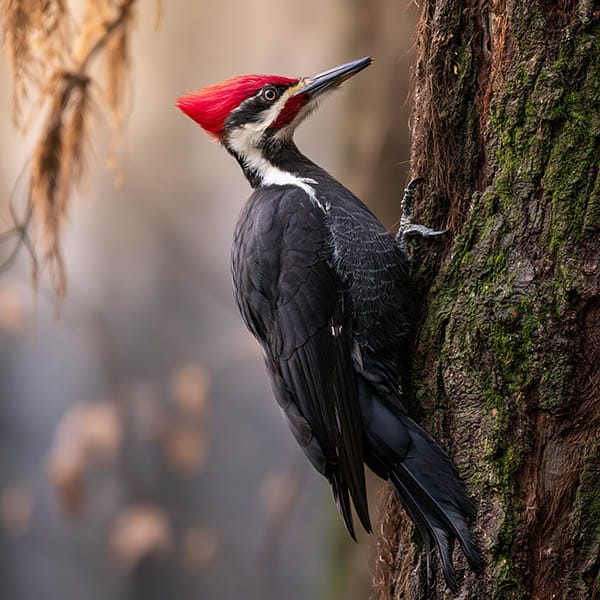
Pileated woodpecker clinging to tree trunk in forest with bright red crest visible

Bring this charming pileated woodpecker design into your daily routine.
How to Identify a Pileated Woodpecker

Close-up of pileated woodpecker showing facial markings and bright red crest
Pileated woodpeckers are large birds with long necks, strong pointed bills, and striking red crests that stand prominently on top of their heads. Their bodies are mostly black with white stripes running along the face and neck.
In flight, large white patches beneath the wings become visible, making them easier to identify from a distance. Their size alone also sets them apart from smaller woodpecker species commonly found in backyards.
They move with strong, deliberate motions while climbing tree trunks and often appear larger and more powerful than many people expect when seen up close.
Where Pileated Woodpeckers Live
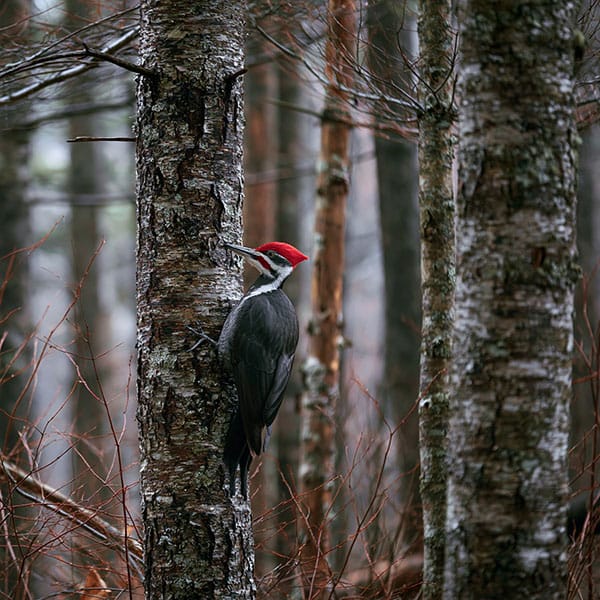
Pileated woodpecker perched in mature forest surrounded by tall trees
Pileated woodpeckers are most commonly found in mature forests with large trees and abundant dead wood. They thrive in wooded regions across much of North America, including deciduous forests, mixed woodlands, and swampy forest areas.
Because they rely heavily on large trees for feeding and nesting, they are more commonly seen in older forests than highly developed urban areas. However, they may occasionally visit wooded suburban neighborhoods if suitable habitat is nearby.
Their presence is often considered a sign of a healthy forest ecosystem with enough insects, decaying wood, and nesting opportunities to support larger wildlife species.
Drumming and Tree Excavation
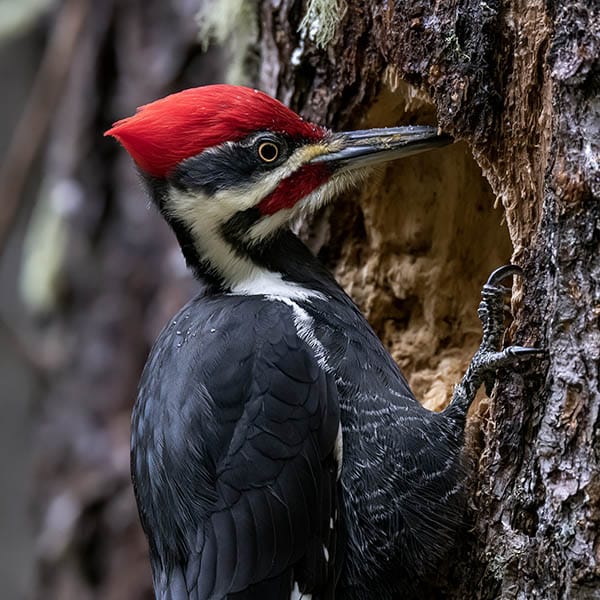
Pileated woodpecker actively pecking into tree bark
One of the most recognizable signs of a pileated woodpecker is its loud drumming sound echoing through the woods. These birds use powerful strikes against trees to communicate, establish territory, and search for insects beneath bark.
Pileated woodpeckers create large rectangular holes in dead or decaying wood while searching for carpenter ants and other insects. These excavations are much larger than those created by smaller woodpecker species and are often easy to identify in the forest.
Their strong bills and muscular necks allow them to break apart wood with impressive force and speed.
Diet and Feeding Habits
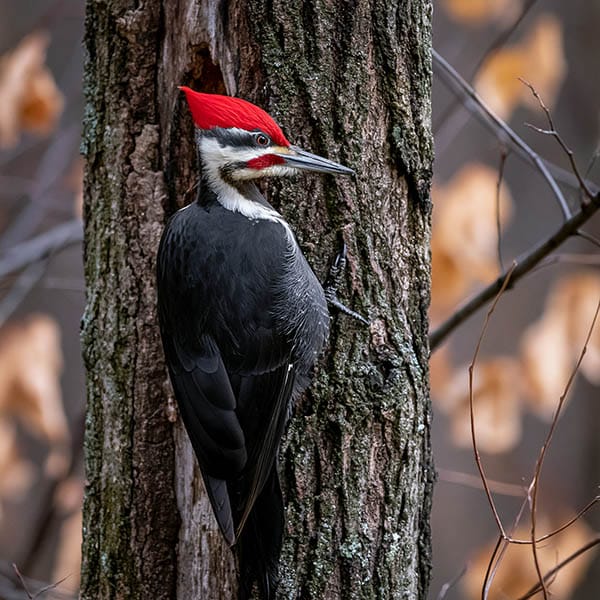
Pileated woodpecker searching for insects on large tree trunk in woodland
Pileated woodpeckers primarily feed on insects, especially carpenter ants and beetle larvae found inside dead wood. Their long tongues help them reach deep into crevices and tunnels beneath bark.
They may also eat fruits, berries, and nuts depending on the season. In colder months, food sources can become more limited, causing them to spend even more time searching tree trunks for insects.
Unlike some smaller woodpeckers, pileated woodpeckers are less common at traditional bird feeders, though they may occasionally visit suet feeders in wooded areas.
Nesting and Forest Impact
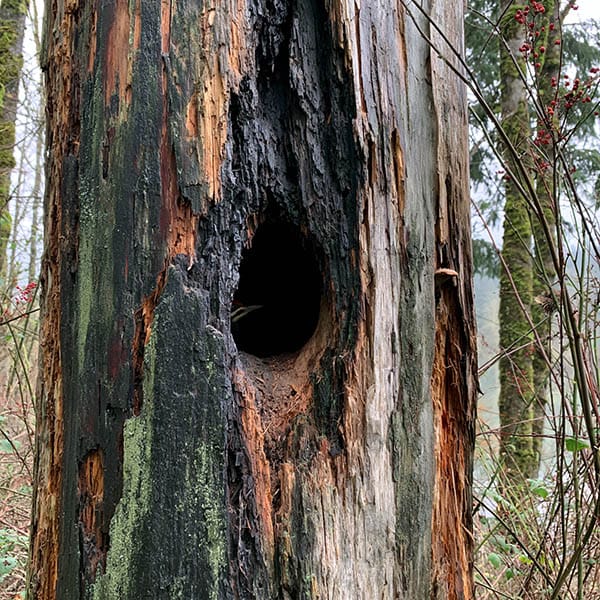
Large nesting cavity created by pileated woodpecker in dead tree trunk
Pileated woodpeckers excavate large nesting cavities in dead trees, creating spaces that later benefit many other wildlife species. Once abandoned, these cavities may be used by owls, ducks, squirrels, and other birds.
Because of this, pileated woodpeckers play an important role in forest ecosystems. Their feeding and nesting activity helps recycle decaying wood while also supporting biodiversity.
Breeding pairs typically remain together and defend territories during nesting season, often returning to familiar forest areas year after year.
Why Pileated Woodpeckers Fascinate Bird Watchers
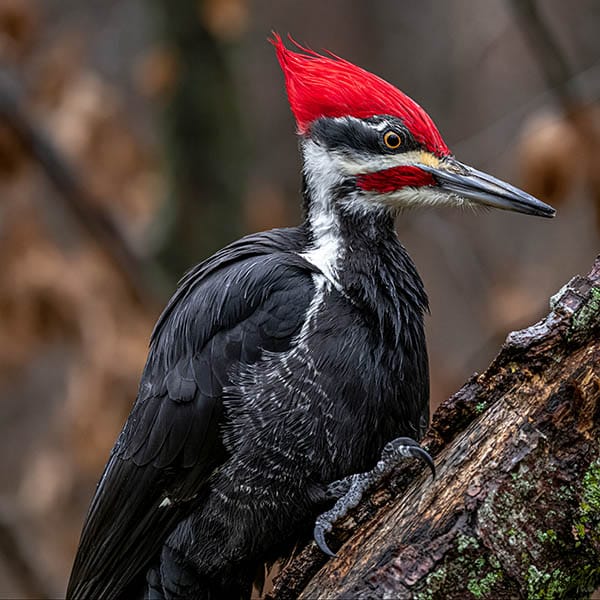
Pileated woodpecker perched dramatically on weathered tree against forest background
Few forest birds create the same sense of excitement as spotting a pileated woodpecker. Their large size, striking coloration, and loud drumming sounds make them feel almost prehistoric compared to smaller backyard birds.
Because they are often associated with deep forests and mature woodlands, sightings can feel especially memorable and connected to wilderness environments.
Their dramatic appearance and active behavior also make them popular subjects for wildlife photography, nature art, and woodland-inspired decor.
Final Thoughts
The pileated woodpecker combines striking appearance, powerful behavior, and strong connections to mature forests in a way few birds can match. Its loud drumming, dramatic red crest, and energetic movement make it one of the most memorable birds in North America.
Whether heard echoing through the woods or seen climbing a towering tree trunk, the pileated woodpecker continues to capture attention and symbolize the energy and vitality of healthy forest ecosystems.