
Common Loon Guide: Calls, Habitat, Behavior, and Northern Lake Life
The common loon is one of the most iconic water birds in North America. Known for its haunting calls, striking black-and-white plumage, and calm presence on northern lakes, the loon has become deeply connected to wilderness landscapes and quiet outdoor settings.
Whether seen gliding across still water at sunrise or heard calling through evening fog, loons create an atmosphere that feels peaceful, remote, and distinctly northern. Their unique appearance and vocalizations make them one of the most memorable birds for nature enthusiasts, campers, and lakefront visitors alike.
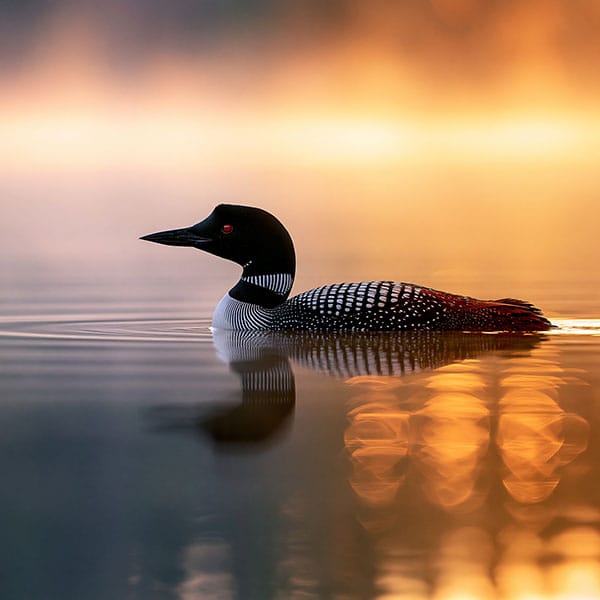
Common loon floating on calm northern lake during sunrise with soft reflections on water

Bring this charming loon design into your daily routine.
How to Identify a Common Loon
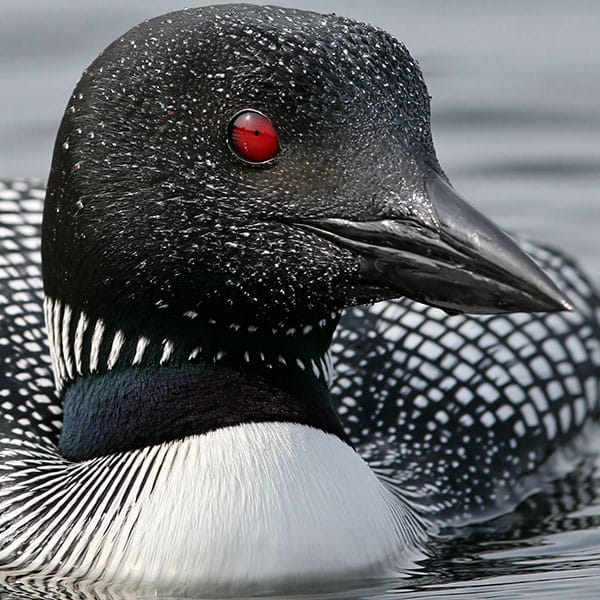
Close-up of common loon showing detailed black-and-white feather patterns and red eyes
Common loons are large diving birds with sleek bodies, long necks, and sharp pointed bills. During breeding season, they display dramatic black-and-white checkerboard feather patterns across their backs along with glossy dark heads and bright red eyes.
Their low profile in the water and streamlined shape make them easy to distinguish from ducks and other water birds. In flight, loons stretch their necks straight outward, creating a strong and narrow silhouette.
Outside of breeding season, their plumage becomes more muted with softer gray tones, though their shape and behavior still make them recognizable.
Where Common Loons Live
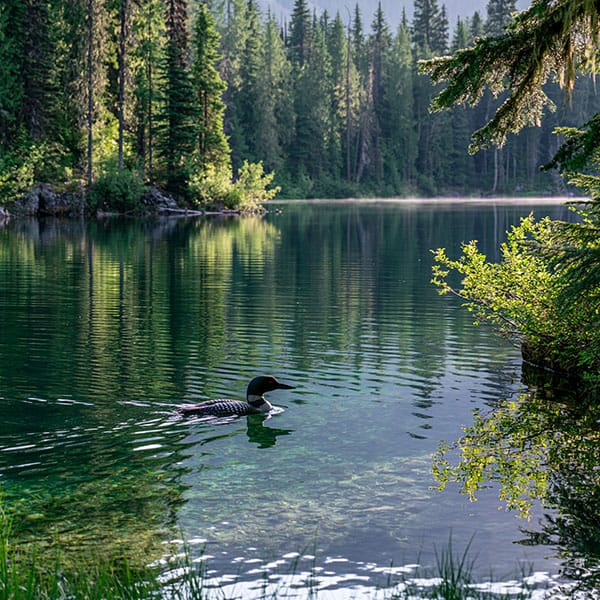
Common loon swimming across clear northern lake surrounded by evergreen forest
Common loons are strongly associated with freshwater lakes across the northern United States and Canada. They prefer large, clear lakes with healthy fish populations and enough open water for takeoff and landing.
During summer, loons nest near quiet shorelines surrounded by forests and undeveloped wilderness. In colder months, many migrate toward coastal ocean waters where food remains available year-round.
Because they rely heavily on healthy aquatic ecosystems, loons are often viewed as indicators of clean water and stable lake habitats.
The Famous Call of the Loon
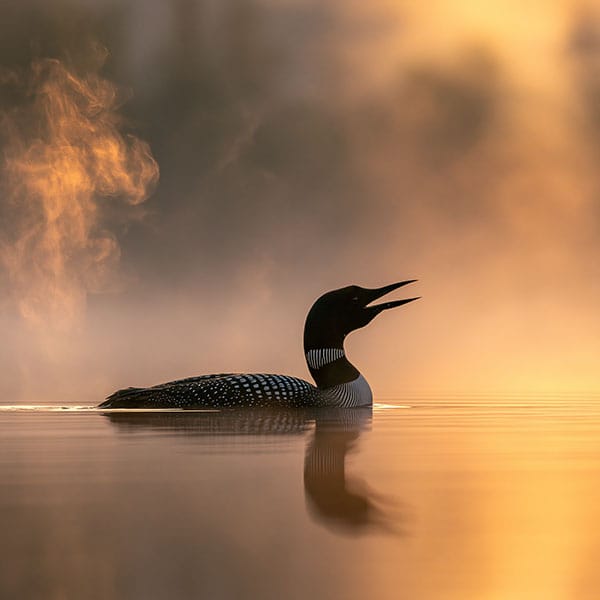
Common loon calling across misty lake during early morning light
One of the most recognizable wilderness sounds in North America is the call of the common loon. Their vocalizations echo across lakes with haunting, wavering tones that feel peaceful, distant, and mysterious.
Loons use several different calls depending on the situation. Some are used to communicate with mates or chicks, while others act as territorial warnings or alarm signals.
For many people, hearing a loon call instantly creates memories of cabins, camping trips, quiet evenings, and remote outdoor settings. Few bird sounds are as emotionally tied to nature and wilderness experiences.
Diving and Hunting Skills
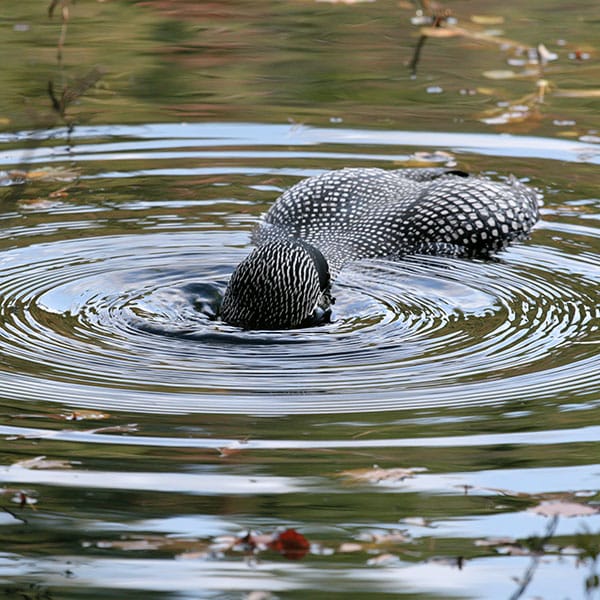
Common loon diving below lake surface with water ripples spreading outward
Loons are specialized underwater hunters built almost entirely around swimming and diving efficiency. Their legs are positioned far back on their bodies, helping them move powerfully beneath the surface.
They primarily feed on fish, though they may also eat insects, crustaceans, and small aquatic animals. Using sharp eyesight and streamlined bodies, loons can chase prey underwater with remarkable speed and precision.
They are capable of diving surprisingly deep and often resurface far from where they originally disappeared.
Nesting and Raising Young
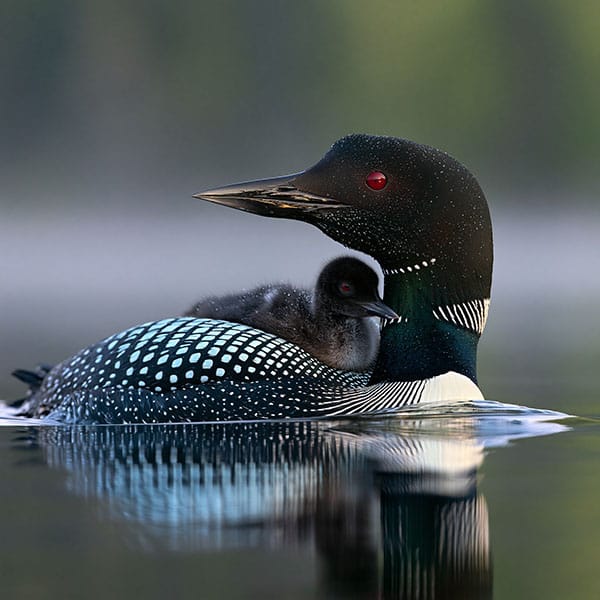
Adult loon carrying small chick on its back while floating across calm lake water
Loons build nests extremely close to the water’s edge, often on small islands or protected shorelines. This allows adults to quickly slide into the water if danger approaches.
Young chicks can swim shortly after hatching, but they frequently ride on the backs of their parents during their first days of life. This behavior helps keep them warm and protected from predators.
Both parents participate in feeding and protecting the chicks throughout the breeding season, often staying highly alert to nearby threats.
Why Loons Represent Northern Wilderness
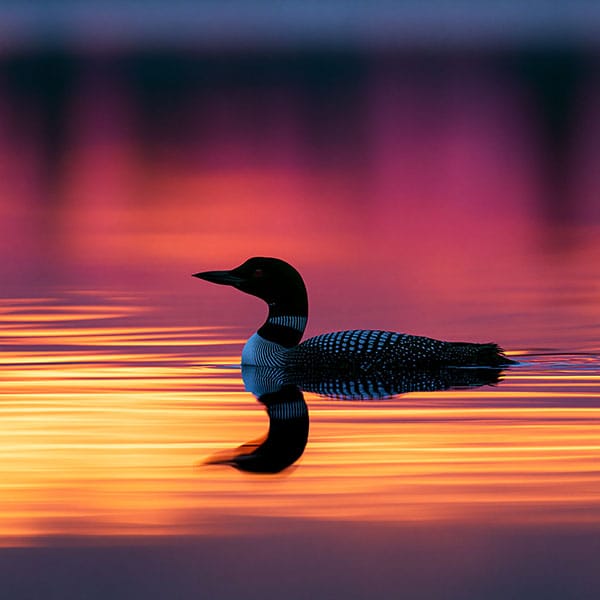
Common loon silhouetted against colorful sunset reflecting on still lake water
Loons build nests extremely close to the water’s edge, often on small islands or protected shorelines. This allows adults to quickly slide into the water if danger approaches.
Young chicks can swim shortly after hatching, but they frequently ride on the backs of their parents during their first days of life. This behavior helps keep them warm and protected from predators.
Both parents participate in feeding and protecting the chicks throughout the breeding season, often staying highly alert to nearby threats.
Final Thoughts
The common loon combines beauty, mystery, and wilderness presence in a way few birds can match. From its haunting calls to its graceful movement across calm northern lakes, it has become one of the most memorable and beloved birds in North America.
Whether seen in the wild or represented through art and decor, the loon continues to symbolize quiet outdoor experiences and the timeless atmosphere of northern lake country.