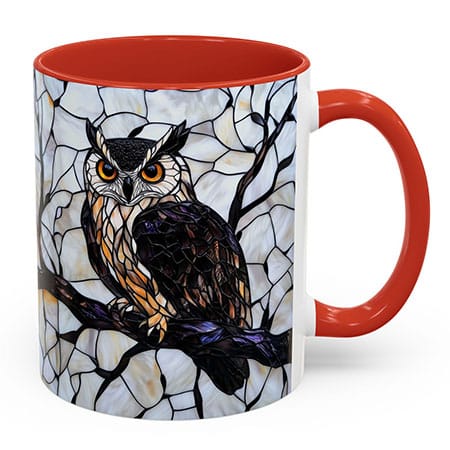
Great Horned Owl Guide: Identification, Behavior, and Nocturnal Hunting Skills
The great horned owl is one of the most powerful and recognizable birds of prey in North America. With its piercing yellow eyes, deep hooting call, and distinctive feather tufts that resemble horns, it carries an unmistakable presence in forests, deserts, swamps, and even suburban areas.
Often active when most of the world is asleep, this owl has become a symbol of mystery, silence, and nighttime wilderness. Its combination of strength, stealth, and adaptability makes it one of the most fascinating owls to observe and one of the most visually striking birds in nature.
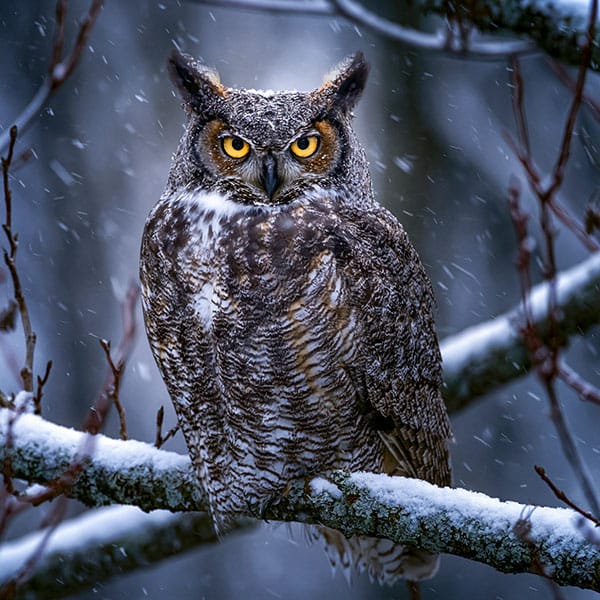
Great horned owl perched on snow-covered branch staring directly toward camera with glowing yellow eyes

Bring this charming great horned owl design into your daily routine.
How to Identify a Great Horned Owl
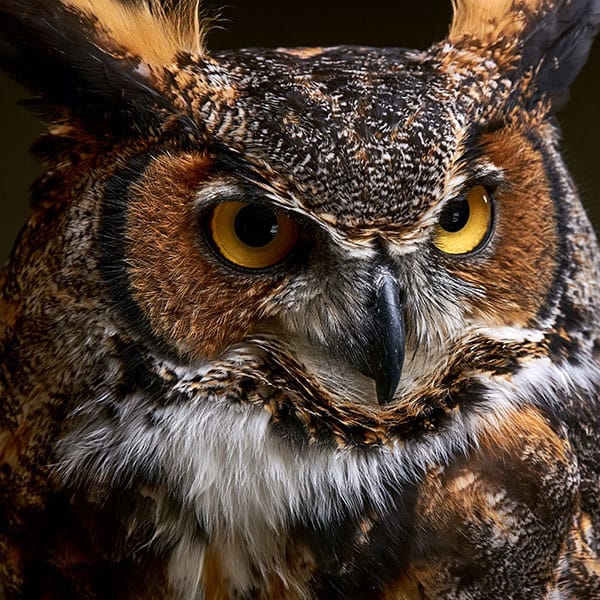
Close-up portrait of great horned owl showing feather tufts, facial patterns, and detailed plumage
Great horned owls are large, heavily built birds with broad wings and thick feathering. Their most recognizable feature is the pair of feather tufts on top of their heads, often mistaken for ears or horns.
Their plumage ranges from mottled brown and gray to reddish tones, helping them blend naturally into tree bark and forest environments. Bright yellow eyes stand out sharply against their darker facial feathers, giving them an intense and alert expression.
They also have a large barrel-shaped body and powerful talons, making them appear imposing even while resting quietly in a tree.
Where Great Horned Owls Live
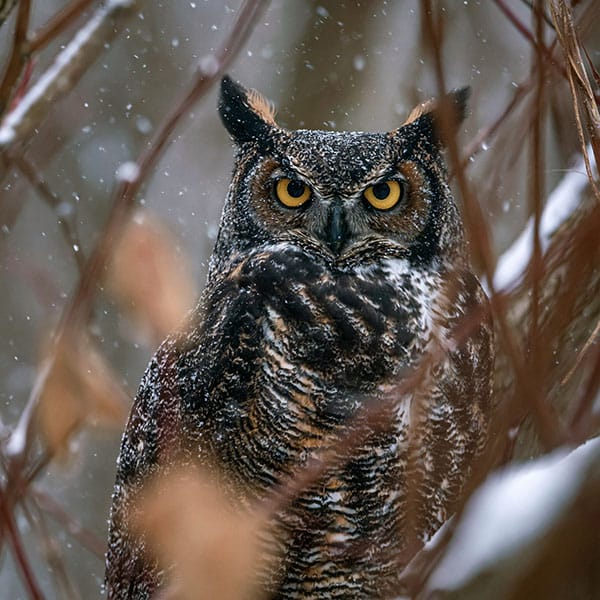
Great horned owl perched high in woodland habitat during winter conditions
Great horned owls are one of the most widespread owls in the Americas. They can be found in forests, deserts, grasslands, swamps, mountain regions, and suburban neighborhoods.
Their adaptability allows them to survive in many different climates and environments. As long as there are trees or elevated nesting locations nearby, they can establish territory successfully.
Unlike some birds that migrate seasonally, great horned owls typically remain in the same territory year-round, especially when food sources remain stable.
Nocturnal Hunting and Silent Flight
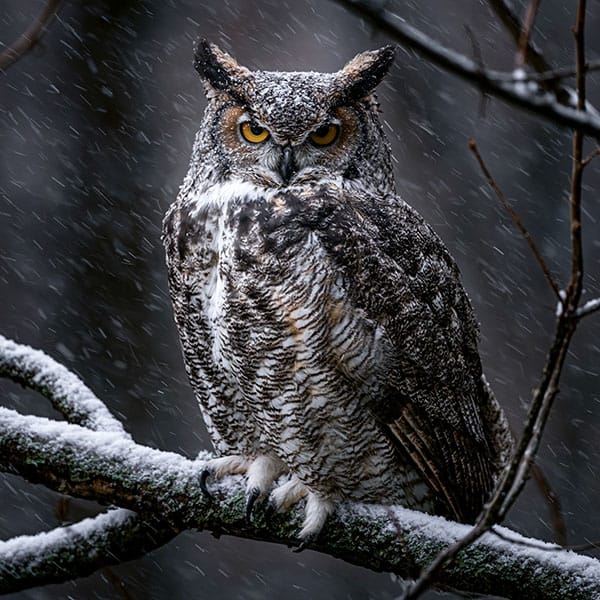
Great horned owl gripping snowy branch with large talons visible in low light setting
Great horned owls are highly efficient nighttime predators. Their specialized feathers allow them to fly almost silently, helping them approach prey without detection.
They hunt a wide variety of animals including rabbits, rodents, squirrels, birds, and sometimes even skunks. Their powerful grip strength and sharp talons make them one of the top predators in many ecosystems.
Much of their hunting happens at night, when their exceptional hearing and low-light vision give them a major advantage over prey animals.
The Famous Hooting Call
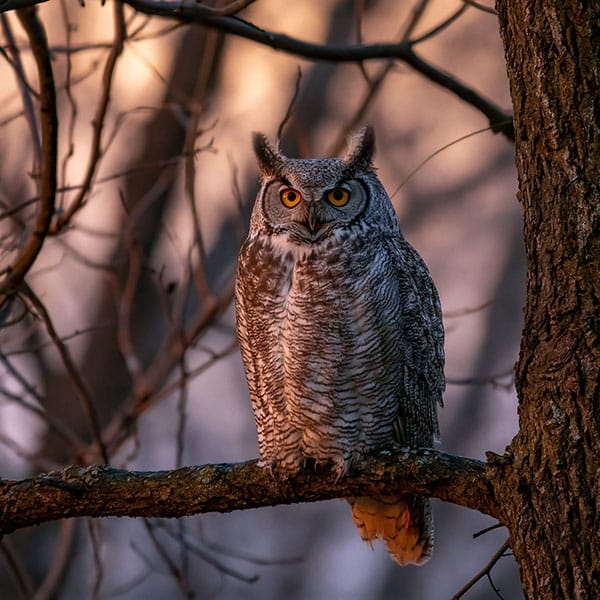
Great horned owl perched at dusk appearing alert and vocal in fading evening light
One of the most recognizable sounds in North American wilderness is the deep hooting call of the great horned owl. Their calls are low, rhythmic, and often echo through forests during the evening and early morning hours.
Pairs may call back and forth to communicate territory boundaries or strengthen bonds during breeding season. These vocalizations are especially common during colder months when courtship begins.
For many people, hearing a great horned owl at night immediately creates an atmosphere of wilderness and quiet isolation.
Nesting and Raising Young
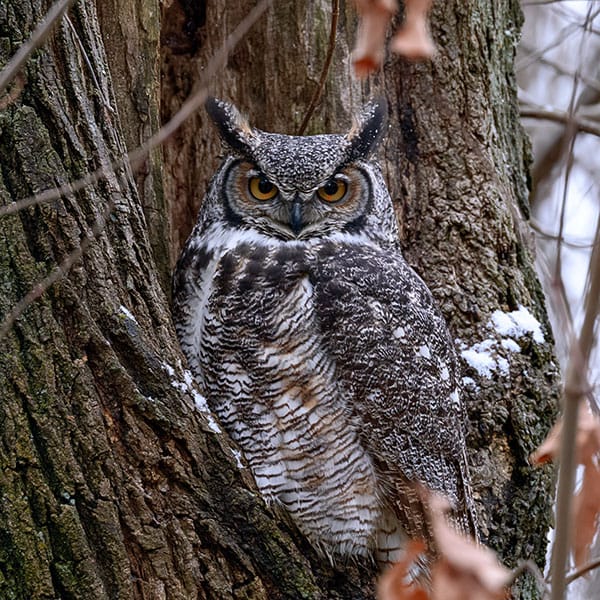
Great horned owl perched protectively near nesting area in winter woodland
Great horned owls usually do not build their own nests. Instead, they often take over abandoned nests created by hawks, crows, or other large birds.
Breeding begins surprisingly early in the year, sometimes during winter when snow is still on the ground. The female remains close to the nest while the male hunts and brings food.
Young owls develop quickly and begin exploring nearby branches before they are fully capable of sustained flight. Their fluffy white feathers gradually transition into darker adult plumage over time.
Blue jays are active year-round, which makes them a consistent presence in many areas. In the fall, they are often seen gathering and storing food, preparing for the colder months.
During winter, their bright blue coloring stands out even more against snow-covered landscapes, making them easier to spot. In spring and summer, they become more focused on nesting and raising their young.
Their activity patterns shift with the seasons, but their visibility and presence remain strong throughout the year.
Final Thoughts
The great horned owl combines strength, silence, and adaptability in a way few birds can match. Its unmistakable appearance and nighttime behavior have made it one of the most iconic owls in the world.
Whether heard calling through the woods at night or seen perched silently in a tree, the great horned owl leaves a lasting impression that continues to inspire bird enthusiasts, photographers, and artists alike.