
Bald Eagle Guide: Identification, Habitat, Hunting, and Symbolism
The bald eagle is one of the most recognizable birds in North America. With its white head, powerful wingspan, and commanding presence, it has become a symbol of strength, freedom, and wilderness across the United States and Canada.
Often seen soaring above lakes, rivers, and coastlines, bald eagles create an unforgettable sight in the wild. Their combination of size, sharp vision, and hunting ability makes them one of the most impressive birds of prey in the world and a favorite subject for wildlife enthusiasts, photographers, and nature-inspired art.
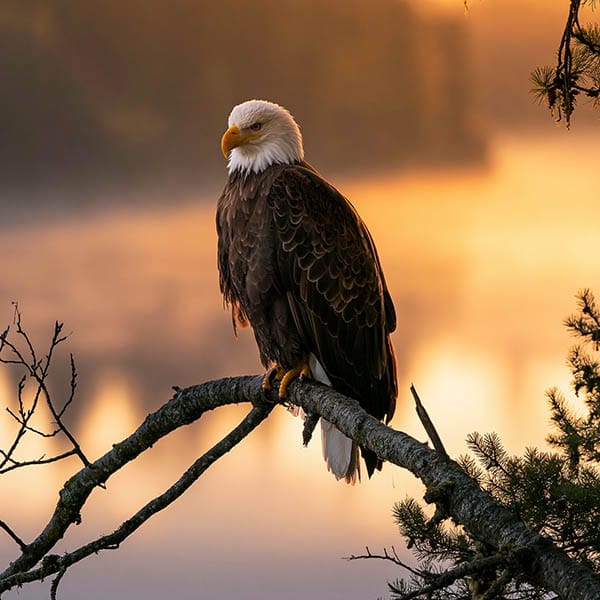
Adult bald eagle perched on tree branch overlooking lake during golden sunrise light

Bring this charming bald eagle design into your daily routine.
How to Identify a Bald Eagle
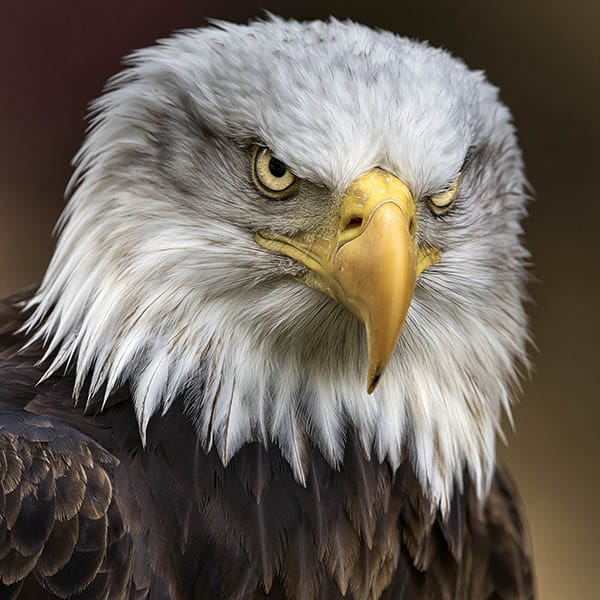
Close-up portrait of adult bald eagle showing white head and yellow beak detail
Adult bald eagles are easy to recognize because of their bright white heads and tails contrasted against dark brown bodies and wings. Their hooked yellow beaks and intense eyes add to their unmistakable appearance.
Young bald eagles look very different from adults and do not develop the classic white head until several years later. Juveniles are mostly mottled brown with scattered white patches, which can sometimes make identification more difficult.
Bald eagles are also among the largest birds of prey in North America, with broad wings and powerful flight patterns that make them stand out even from long distances.
Where Bald Eagles Live

Bald eagle soaring above Lake Superior surrounded by forest.
Bald eagles are commonly found near large bodies of water including lakes, rivers, reservoirs, and coastal shorelines. These environments provide both fish and tall trees suitable for nesting.
They are widespread throughout much of North America and are especially common in regions with healthy fish populations and protected wilderness habitat. During winter, bald eagles often gather near open water where food remains accessible.
Because they require large nesting sites and reliable food sources, bald eagles are often associated with relatively undisturbed natural environments.
Hunting and Feeding Behavior
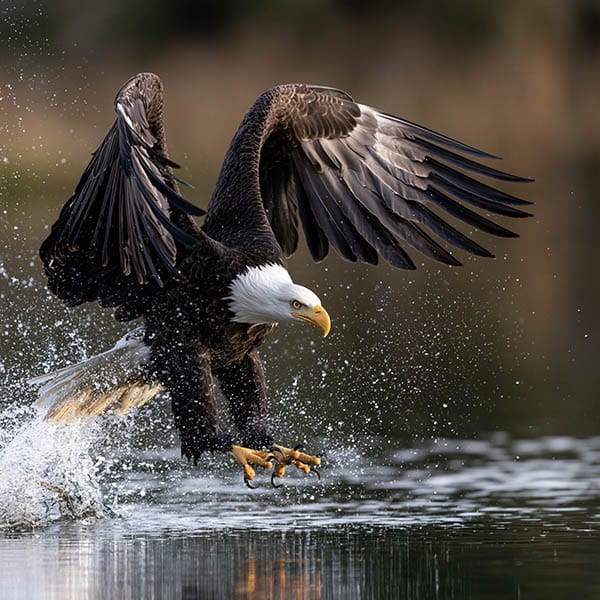
Bald eagle diving toward water with talons extended while hunting fish
Fish make up the majority of a bald eagle’s diet, and their hunting strategy is built around powerful vision and fast aerial attacks. Eagles typically soar above the water before diving feet-first to grab fish with their sharp talons.
They are also opportunistic feeders and may eat waterfowl, small mammals, or carrion depending on conditions and food availability. In colder regions, they sometimes gather around rivers during spawning seasons when fish are easier to catch.
Their strength and precision make them one of the top predators in many aquatic ecosystems.
Massive Nests and Raising Young
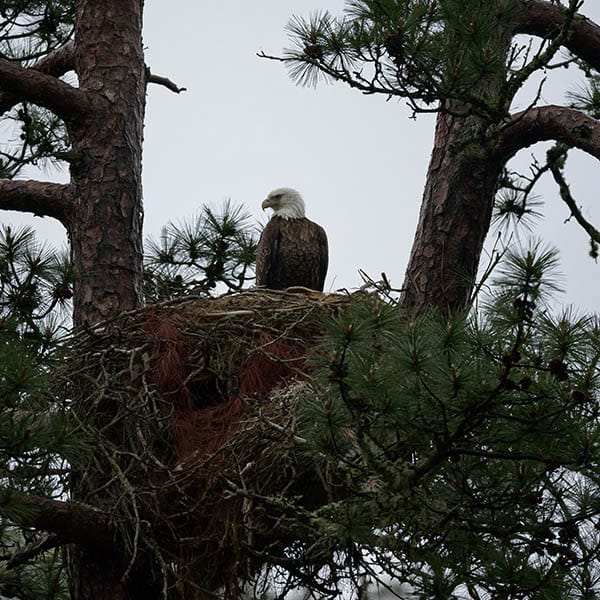
Bald eagle nest high in tall pine tree with adult eagle standing nearby
Bald eagles are commonly found near large bodies of water including lakes, rivers, reservoirs, and coastal shorelines. These environments provide both fish and tall trees suitable for nesting.
They are widespread throughout much of North America and are especially common in regions with healthy fish populations and protected wilderness habitat. During winter, bald eagles often gather near open water where food remains accessible.
Because they require large nesting sites and reliable food sources, bald eagles are often associated with relatively undisturbed natural environments.
The Bald Eagle as a Symbol
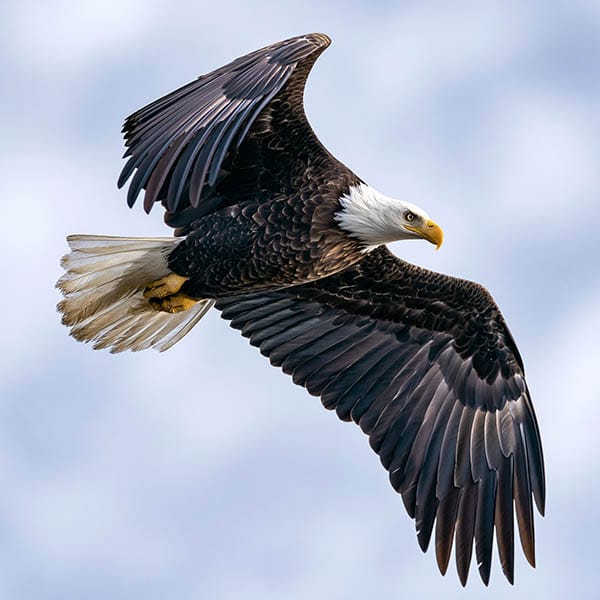
Bald eagle soaring against bright sky with wings fully extended
The bald eagle has become one of the most recognizable national symbols in the United States, representing freedom, strength, and resilience. Its image appears on official seals, currency, flags, and countless forms of artwork.
Beyond symbolism, many people associate bald eagles with wilderness, independence, and natural beauty. Seeing one in the wild often feels memorable because of its size, confidence, and commanding appearance.
Their dramatic visual contrast and soaring flight patterns also make them especially popular in wildlife photography and patriotic art.
Conservation and Recovery
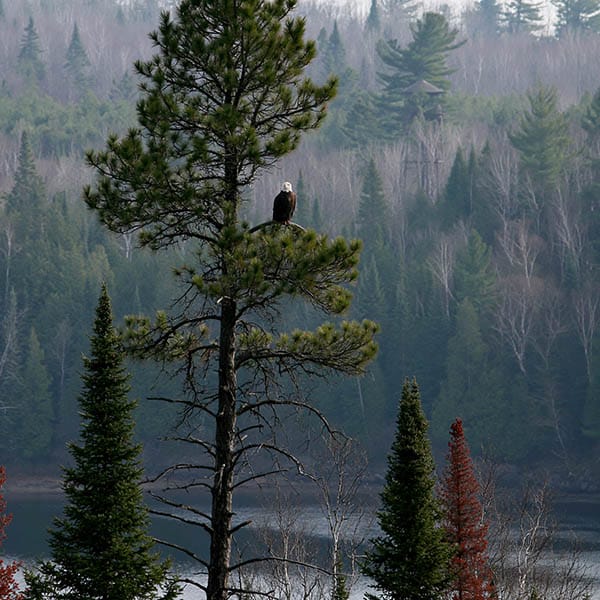
Bald eagle perched near shoreline with forested wilderness in background
Few forest birds create the same sense of excitement as spotting a pileated woodpecker. Their large size, striking coloration, and loud drumming sounds make them feel almost prehistoric compared to smaller backyard birds.
Because they are often associated with deep forests and mature woodlands, sightings can feel especially memorable and connected to wilderness environments.
Their dramatic appearance and active behavior also make them popular subjects for wildlife photography, nature art, and woodland-inspired decor.
Final Thoughts
The bald eagle combines power, grace, and symbolism in a way few birds can match. From its soaring flight and sharp hunting skills to its role as a national icon, it continues to capture attention wherever it appears.
Whether seen gliding above open water or represented through wildlife art and decor, the bald eagle remains one of North America’s most admired and recognizable birds.