
Blue Jay Bird Guide: Identification, Behavior, and Backyard Insights
The blue jay is one of the most recognizable and dynamic birds in North America. With its bold blue feathers, sharp crest, and unmistakable call, it rarely goes unnoticed. Whether seen darting through trees or perched confidently at a feeder, the blue jay brings energy and personality to any environment.
Beyond its striking appearance, this bird is known for its intelligence, adaptability, and complex behavior—making it a fascinating subject for both casual observers and dedicated bird enthusiasts.
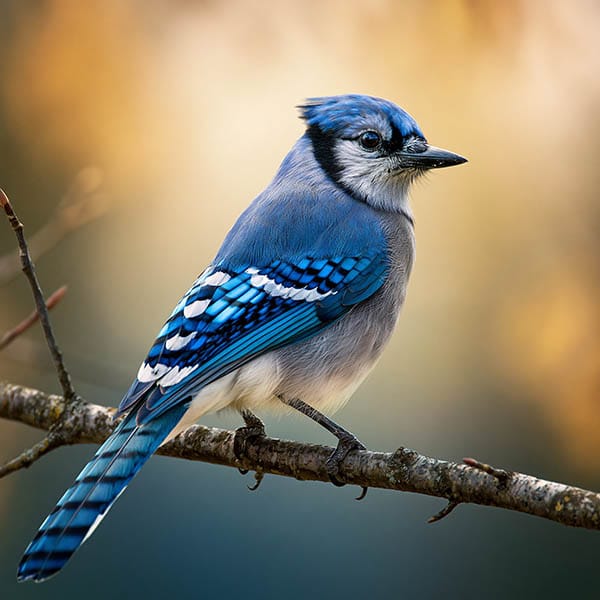
Blue jay perched on a tree branch with soft natural background and shallow depth of field.

Bring this charming blue jay design into your daily routine.
Where Blue Jays Live and Thrive
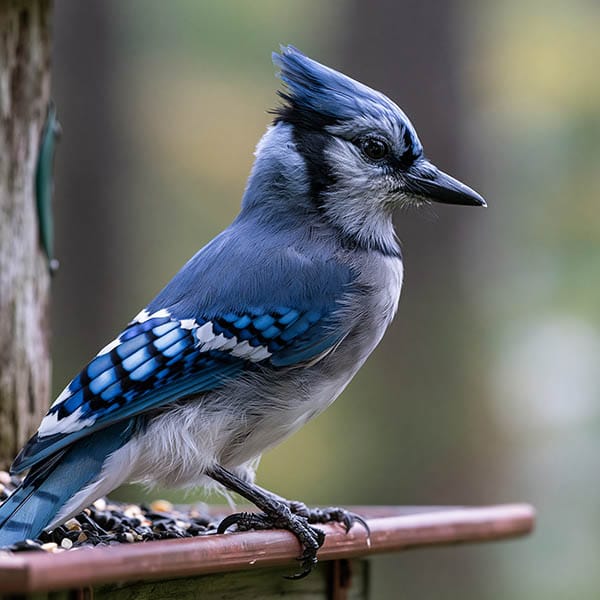
Blue jay in a suburban backyard perched near a bird feeder with trees in the background.
Blue jays are commonly found throughout eastern and central North America. They prefer forests, woodlands, and areas with plenty of trees, but they have adapted extremely well to suburban and urban environments.
You’ll often find them in backyards, parks, and along tree-lined streets. Their ability to thrive near human activity makes them one of the more familiar birds for many people.
They tend to stay year-round in many regions, though some populations may migrate short distances depending on food availability and seasonal changes.
Behavior and Personality Traits
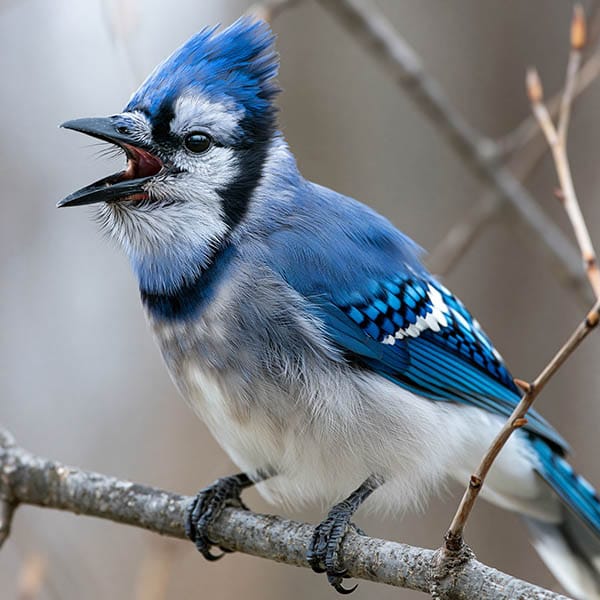
Blue jay with open beak mid-call perched on a branch showing expressive posture.
Blue jays are known for being bold, vocal, and highly alert. They are not shy birds and will often dominate feeders or defend their territory with confidence.
They communicate using a wide range of calls, from loud, harsh cries to softer, more subtle sounds. Interestingly, they are also capable of mimicking the calls of other birds, including hawks, which can sometimes confuse both predators and other birds.
Their behavior can seem aggressive at times, but it is largely driven by their intelligence and strong survival instincts.
Diet and Feeding Habits
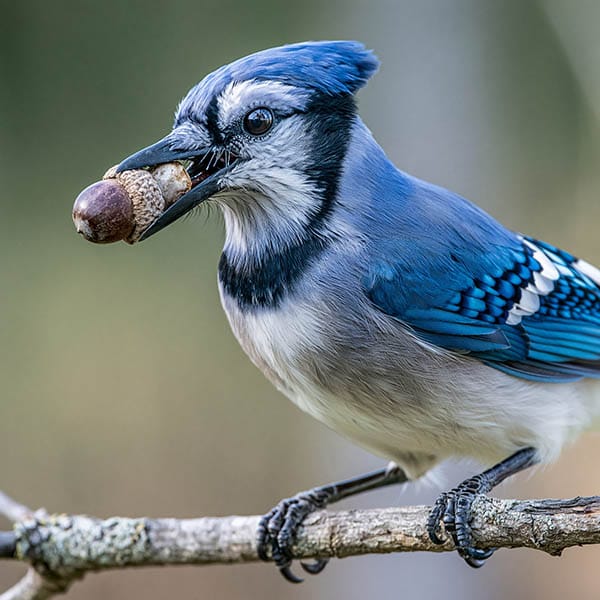
Blue jay holding an acorn in its beak perched on a branch.
Blue jays are omnivores with a varied diet. They eat nuts, seeds, fruits, and insects, making them highly adaptable to different environments.
Acorns are one of their favorite foods, and they are known for storing them for later use. This habit actually helps forests grow, as forgotten acorns can sprout into new trees.
In backyard settings, they are commonly attracted to peanuts, sunflower seeds, and suet. Their strong beaks allow them to handle larger food items that smaller birds cannot manage.
Intelligence and Problem-Solving
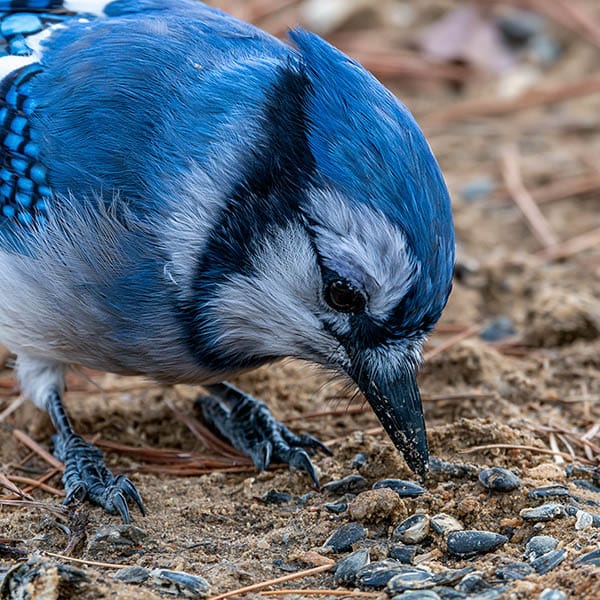
Blue jay interacting with an object or examining food closely on the ground.
Blue jays belong to the corvid family, which includes crows and ravens—some of the most intelligent birds in the world. This intelligence shows in their ability to solve problems, remember food locations, and adapt to changing environments.
They are known to observe their surroundings carefully and can even learn from experience. This makes them more interactive to watch compared to many other bird species.
Their awareness and quick decision-making contribute to their success in both wild and human-influenced habitats.
Seasonal Changes and Activity
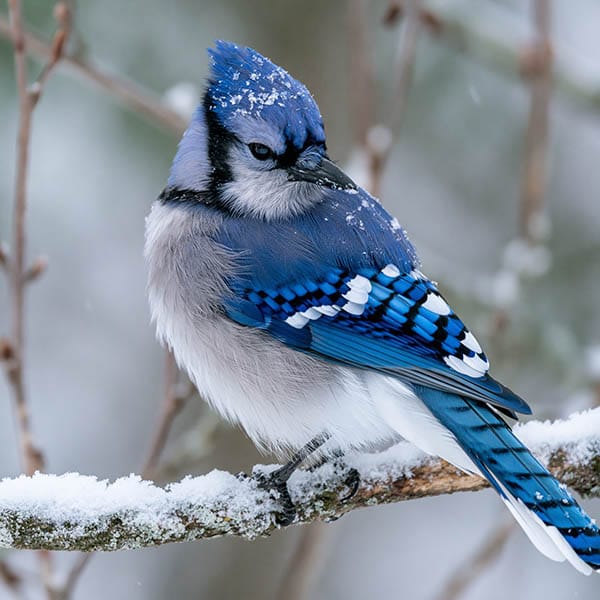
Blue jay perched on a snow-covered branch during winter.
Blue jays are active year-round, which makes them a consistent presence in many areas. In the fall, they are often seen gathering and storing food, preparing for the colder months.
During winter, their bright blue coloring stands out even more against snow-covered landscapes, making them easier to spot. In spring and summer, they become more focused on nesting and raising their young.
Their activity patterns shift with the seasons, but their visibility and presence remain strong throughout the year.
Final Thoughts
The blue jay is more than just a colorful bird—it’s a symbol of intelligence, adaptability, and bold presence in the natural world. Its combination of striking appearance and complex behavior makes it one of the most engaging birds to observe.
Whether seen in the wild or represented through art and design, the blue jay continues to capture attention and bring energy to its surroundings.